
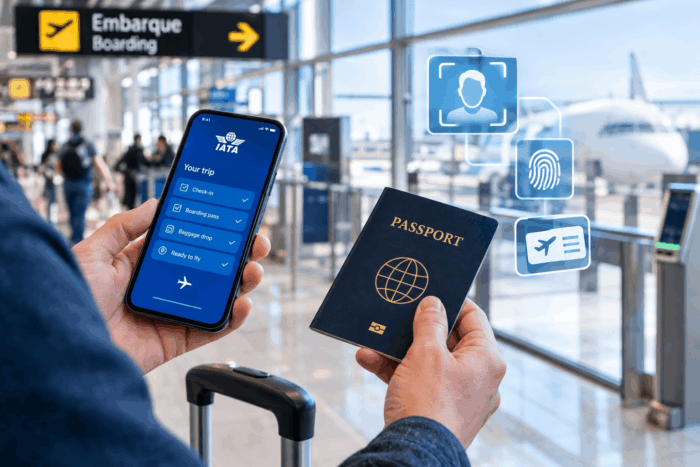
Nearly Half of Air Travelers Now Use Artificial Intelligence to Plan Trips, Reports IATA. The International Air Transport Association (IATA) has released the findings of its 2026 Global Passenger Survey (GPS), drawing from more than 10,000 traveler responses across more than 200 nations. The annual industry study highlights three structural shifts redefining modern air transport: the integration of artificial intelligence (AI) during the pre-trip planning phase, the accelerating adoption of biometrics and digital identity at international airports, and the restrictive travel barriers imposed by complex immigration processes.
Join us on Telegram, Twitter, LinkedIn, Facebook, Instagram, YouTube, WhatsApp, TikTok, and subscribe to our Weekly Digest with just one click.
The survey reveals that 49% of global air travelers have actively utilized artificial intelligence platforms to research and structure their trips. Specifically, 21% of respondents leveraged AI interfaces to pinpoint flights toward a designated destination, 19% used algorithmic tools to search for cheaper airfares, and 17% applied AI to discover new travel itineraries. In light of these operational patterns, IATA urged commercial airlines to adapt distribution APIs and promotional content to remain visible within conversational search engines, ensuring query responses provide direct, actionable booking links.
Contactless and biometric airport processing expanded significantly over the past year, with 58% of travelers utilizing biometric identity verification over the trailing 12-month period, up from 50% in 2025. Among passengers who utilized facial recognition and automated gates, 87% reported satisfaction with the speed and convenience. Furthermore, 78% of surveyed travelers expressed a willingness to share biometric profile data to bypass repetitive passport and physical boarding pass checkpoints, while 84% supported using digital passports for off-airport check-in. However, data privacy remains a concern, with 59% of respondents citing fears over potential data breaches and 49% raising concerns regarding cross-organization information sharing.
Follow us on Google News and receive notifications on your mobile device by clicking the button below.

Government immigration requirements emerged as a major commercial barrier to global air connectivity. Forty-three percent of travelers reported being deterred from visiting specific international destinations due to complicated entry paperwork, climbing sharply from 33% in 2025; among those who abandoned itineraries, 53% cited overly convoluted bureaucratic procedures. Passengers voiced strong demand for modernized border processing, with 86% willing to share digital travel credentials ahead of departure and 60% favoring digital e-visas over consular visits. Addressing these trends, Nick Careen, IATA’s Senior Vice President for Operations, Safety, and Security, stated that international governments must simplify entry protocols, eliminate redundant border checkpoints, and adopt interoperable digital travel credential frameworks.
Must-Watch Video:
You might also be interested in:
- ✈ Avianca makes rapid progress in software updates and passenger service.
- ✈ Air Canada launches direct flights from Toronto and Montreal.
- ✈ Airbus warns of potential solar radiation issues in aircraft.
- ✈ Viva resumes operations in Guadalajara and Puerto Vallarta.
You must be logged in to post a comment.