
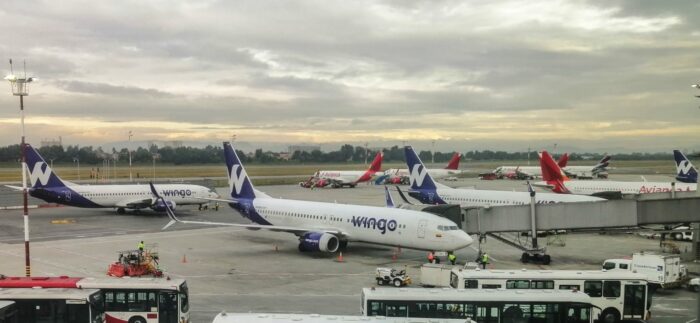
Latin America Air Traffic Grew 6% in March Driven by Regional Demand. Air passenger traffic across Latin America and the Caribbean reached 43.1 million travelers in March 2026, representing a 6% year-over-year increase compared to the same month in 2025. The growth translated into an additional 2.45 million passengers and confirmed the positive momentum the region’s aviation industry has maintained in recent months. Domestic traffic accounted for 54.5% of the total market, while international traffic represented 45.5%. At the same time, total flight supply increased 4.4% year over year, and seat capacity expanded by 4.5%, reflecting continued recovery and strong travel demand throughout the region.
Join us on Telegram, Twitter, LinkedIn, Facebook, Instagram, YouTube, WhatsApp, TikTok, and subscribe to our Weekly Digest with just one click.
Operational indicators also showed solid performance for Latin American airlines. Capacity measured in available seat kilometers (ASK) grew 3.6% year over year, while demand measured in revenue passenger kilometers (RPK) rose 7.3%. As a result, the average load factor reached 83.9%, an increase of 2.9 percentage points compared to March 2025. The strongest growth came from intraregional traffic, which expanded 10.7%, driven by markets such as Argentina-Brazil, where passenger traffic surged 29.8% and connectivity increased to 32 airport pairs, seven more than a year earlier. According to industry data, eight out of every ten additional passengers during the first quarter traveled within Latin America and the Caribbean, highlighting the growing importance of regional connectivity.
Follow us on Google News and receive notifications on your mobile device by clicking the button below.

Despite the positive performance, the report also revealed challenges facing the aviation sector. Traffic between Latin America and the United States declined 2.8% year over year after two consecutive months of growth, mainly due to an 11.6% contraction in the Mexico–United States market. Tourist destinations were also affected, with passenger flows between the U.S. and Cancún falling 11.5%, while traffic to San José del Cabo declined 9.2%. Additionally, some domestic markets recorded decreases, including Mexico (-3.2%), Chile (-1.9%) and Bolivia (-11.5%). The industry is also facing renewed pressure from rising fuel costs, with average jet fuel prices in Latin America and the Caribbean reaching USD 4.36 per gallon during the week ending May 1, nearly double the 2025 average. The increase has been linked to tensions in Iran and restrictions affecting transit through the Strait of Hormuz. Peter Cerdá, CEO of ALTA, warned that preserving affordable connectivity will be essential to sustaining the region’s aviation growth.
Must-Watch Video:
You might also be interested in: Latin America Air Traffic Grew 6% in March Driven by Regional Demand
- ✈ Avianca makes rapid progress in software updates and passenger service.
- ✈ Air Canada launches direct flights from Toronto and Montreal.
- ✈ Airbus warns of potential solar radiation issues in aircraft.
- ✈ Viva resumes operations in Guadalajara and Puerto Vallarta.
You must be logged in to post a comment.