
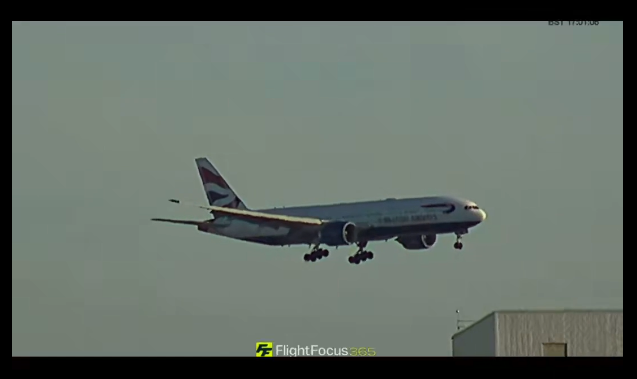
British Airways London–Chicago Flight Declares Emergency Over Ireland After Rapid Descent. A British Airways long-haul flight connecting London Heathrow Airport (LHR) with Chicago O’Hare International Airport (ORD) declared an in-flight emergency following a sudden and steep altitude drop while transiting Irish airspace. Flight BA295, operated by a Boeing 777-200ER, had departed the British capital at 11:50 AM local time for a scheduled eight-hour and 40-minute transatlantic journey before encountering an operational anomaly en route.
Join us on Telegram, Twitter, LinkedIn, Facebook, Instagram, YouTube, WhatsApp, TikTok, and subscribe to our Weekly Digest with just one click.
According to real-time flight tracking data, the widebody aircraft had completed its initial climb and reached its assigned cruising altitude of 37,000 feet roughly one hour into the flight. Shortly after entering Irish airspace, the flight crew transmitted squawk code 7700—the universal aviation transponder signal used to alert air traffic control agencies of a general onboard emergency. Immediately following the declaration, the aircraft initiated a rapid descent maneuver.
Flight tracking records show that the Boeing 777-200ER dropped 28,000 feet in altitude within a span of minutes, leveling off at 9,000 feet. In commercial aviation, executing a controlled rapid descent to an altitude below 10,000 feet represents the mandatory safety protocol when crews encounter flight deck warnings or potential cabin depressurization. Stabilizing the aircraft at 9,000 feet places the cabin within a safe atmospheric pressure layer where passengers and crew members can breathe normally without requiring emergency oxygen masks.
Follow us on Google News and receive notifications on your mobile device by clicking the button below.

Following the descent, the pilots established continuous communication with regional air traffic control centers while evaluating operational conditions. British Airways has not yet issued an official statement detailing the specific technical or mechanical cause behind the squawk. The incident underscores the swift execution of standard emergency descent procedures designed to ensure passenger safety during long-haul operations.
Must-Watch Video:
You might also be interested in:
- ✈ Avianca makes rapid progress in software updates and passenger service.
- ✈ Air Canada launches direct flights from Toronto and Montreal.
- ✈ Airbus warns of potential solar radiation issues in aircraft.
- ✈ Viva resumes operations in Guadalajara and Puerto Vallarta.
You must be logged in to post a comment.